
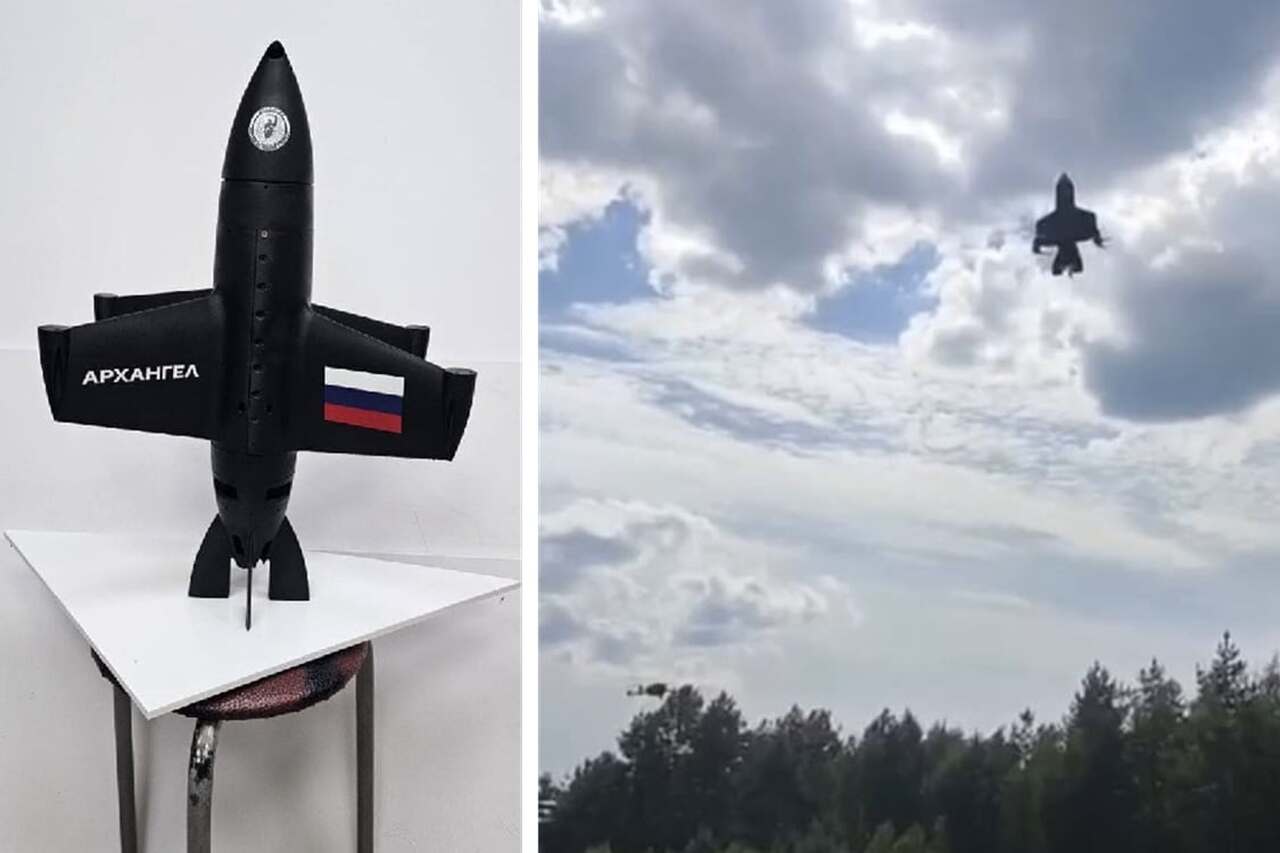
Russia is conducting tests of its new drone interceptor, the Arkhangel, in the Kursk border region, according to statements from the head of the volunteer drone initiative associated with the project.
As reported by Defence Blog, the system is being presented as a response to Ukrainian unmanned aerial vehicles operating both on the front lines and in rear areas inside Russia.
The announcement was made by Mikhail Filippov, who leads the national initiative known as “Arkhangel“, which began as a network of drone pilot training schools.
According to Filippov, newly-formed interception teams and mobile radar teams have already been sent to the Kursk region to conduct operational tests of the new equipment.
He explained that the Arkhangel drone’s structure was designed to act as an interceptor, supporting and expanding Russia’s air defense network.
Filippov emphasized that the drone has no equivalent in terms of speed and range combination, and was created to enhance existing defenses, not replace them.
According to Filippov, Ukrainian forces use reconnaissance drones to look for gaps in Russian air defense systems. Attack drones follow these reconnaissance flights, trying to strike infrastructure, logistics centers, or military positions.
However, Ukrainian drones are much cheaper compared to the Russian weapons typically used to shoot them down, so this approach is not sustainable for Russia, he said.
This is where the Arkhangel comes in, a more affordable alternative designed to solve this economic imbalance by intercepting drones before they reach valuable targets.
According to Filippov, the drone is capable of flying at speeds of around 360 kilometers per hour and operating at ranges of up to 50 kilometers. Ukrainian reconnaissance drones, he said, typically fly at about half that speed.
Thus, mobile teams equipped with radar can track approaching drones and guide the interceptor to chase them in open areas, away from infrastructure and populated settlements, where they can be destroyed without additional risks.
Filippov argued that both sides in the war have reached the same conclusion: the outcome will depend on which side can deploy new anti-drone technologies more quickly and in greater numbers.
Photo: Telegram. This content was created with the help of AI and reviewed by the editorial team.
